A weekly or long-term term suits jobs that move in stages rather than one weekend. Step 1: describe the project and the neighborhood so the right size is matched to the debris. Step 2: the bin is delivered on…
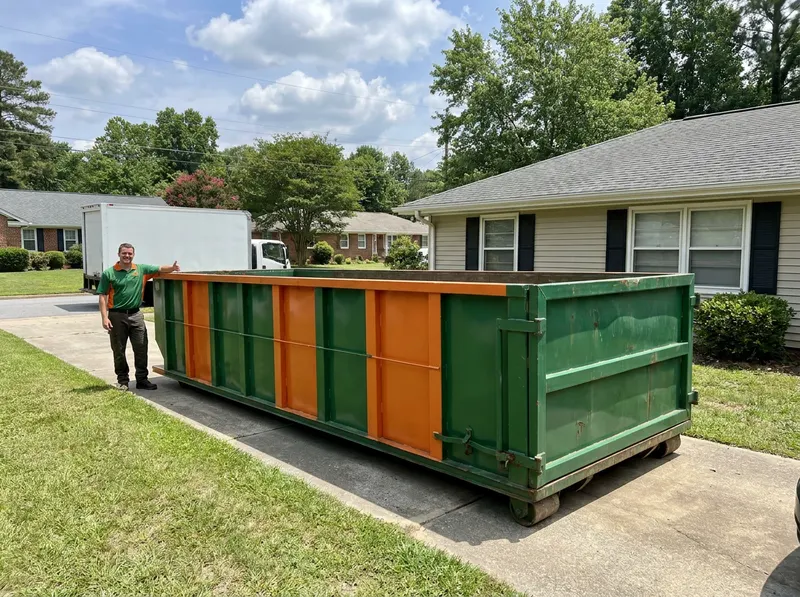
A weekly or long-term term suits jobs that move in stages rather than one weekend. Step 1: describe the project and the neighborhood so the right size is matched to the debris. Step 2: the bin is delivered on protective boards to guard driveway concrete. Step 3: you load at your own pace across the agreed window. Step 4: call for a swap if the bin fills before the job ends. Step 5: pickup is scheduled and the disposal is already covered in the flat price. A weekly window fits a whole-house cleanout in Amberly that spreads over several evenings, while a longer term fits a Highcroft addition or a MacGregor Downs kitchen remodel where drywall, tile, and cabinetry come out over weeks. A dumpster rental is not junk removal, the crew drops the container and you load it, which is why an extended term is worth it when the loading itself takes time.
Right-sizing matters more on a long term than on a one-day drop because a bin that is too small forces a costly swap and a bin that is too big wastes driveway space. The 10-yard holds roughly four pickup-truck loads and fits a bathroom remodel or a garage clearout; the 20-yard holds about eight loads and suits a Kildaire Farm flooring tear-out; the 30-yard and 40-yard handle a roof tear-off or a full Carpenter Village renovation. The trade-off is space against volume: a 40-yard needs a long, flat driveway or a jobsite pad, while a 10-yard tucks beside a Lochmere garage without blocking the walk. Debris weight still matters, the U.S. EPA classifies construction and demolition materials by type, and shingles and concrete load heavier than the same volume of cardboard, so heavy loads are best split across sizes rather than overpacked. Prohibited items follow standard rules for household hazardous waste, which cannot go in any bin.
Street or right-of-way placement in Cary can require a permit from the Town of Cary, and many neighborhoods such as Preston, Weston, and Stonewater carry HOA rules on how long a container sits in view. Placement on your own driveway usually avoids the permit question; keeping the bin on protective boards addresses both the concrete and the appearance. On a jobsite, contractors keep the loading zone clear and follow OSHA jobsite safety guidance around the container so debris does not create a walking hazard. Wake County operates the disposal facilities where the material is weighed and sorted, and recovered wood, metal, and cardboard can be diverted rather than landfilled, Earth911 lists local recycling drop-offs for items the bin will not accept. To reach us, call (984) 273-7842 or text a photo of the pile.
Every job gets a firm, written price after an on-site visit.
Tell us about your weekly & long-term rental terms job in Cary and we'll send a clear, written quote, usually the same day.
 Ken Dumpster Rental